The AI kept lifting the wrong leg, so I traced poses from baseball footage
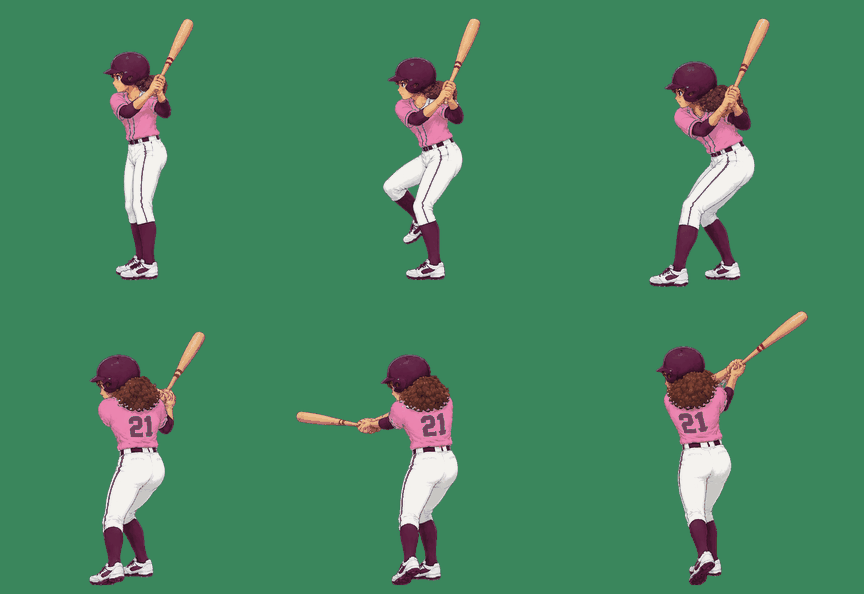
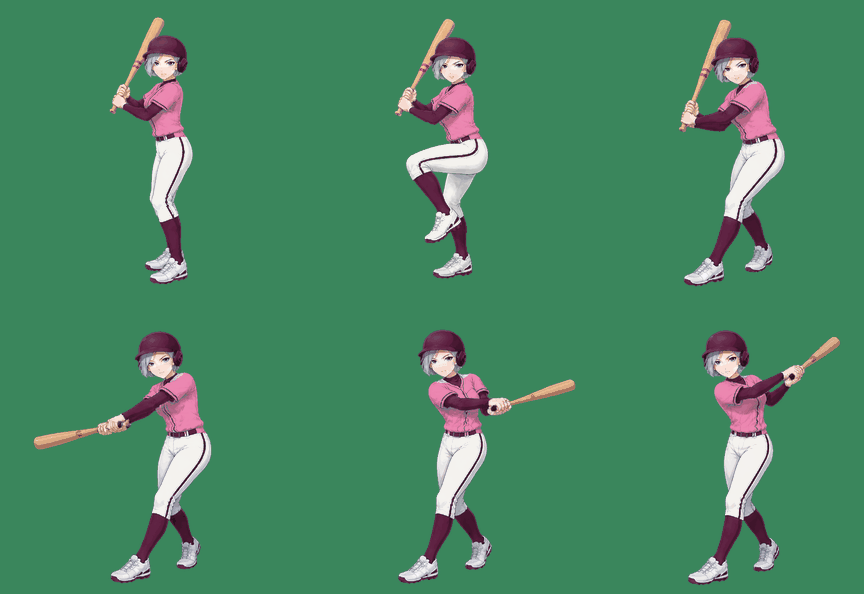
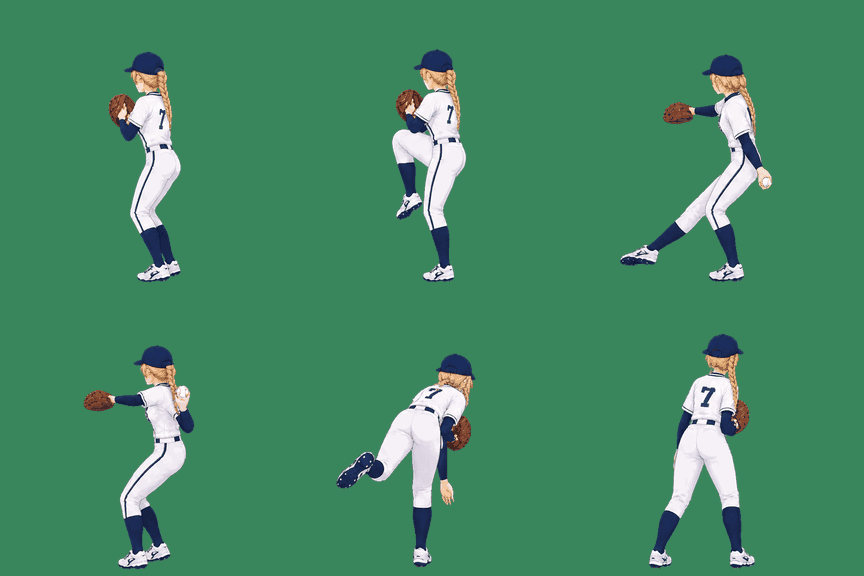
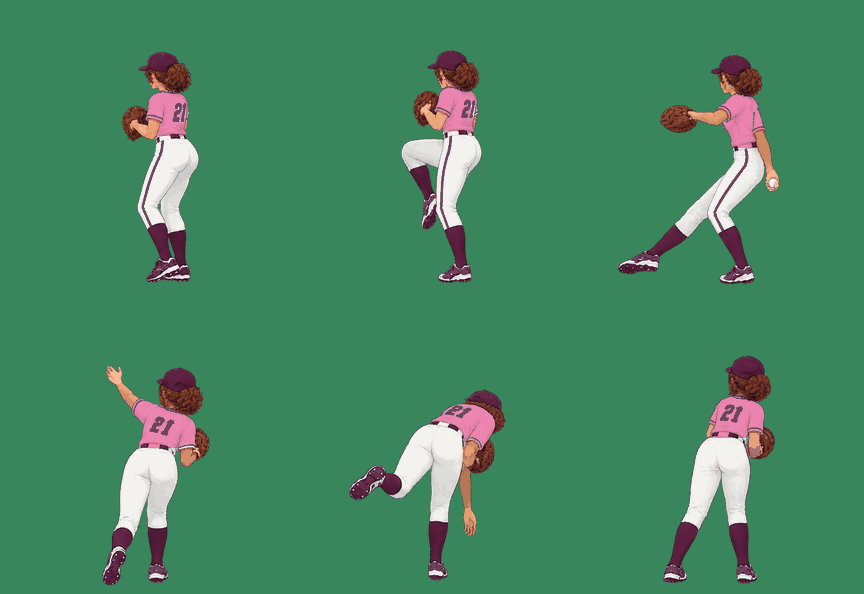
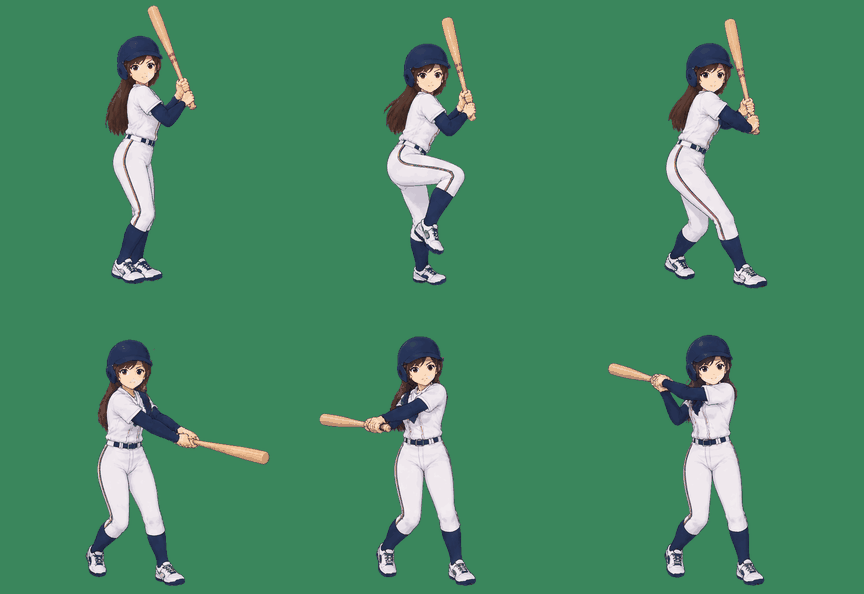
I am making a 2D baseball game on my own, Ninth Inning: Two Outs. It has four players, and each has a pitch and a swing drawn from two sides, front and back: 16 motions in all. They looked awkward, so over two days I had all of them drawn again.
An image model drew them. This post is a record of what I asked for, what came out wrong, and how each thing was fixed. I worked with Claude Code. Claude stepped through the footage, marked the joints, wrote the prompts and built the tools. I looked at the results, said what looked wrong, and approved the credits.
The short version:
- Words did not get the legs of a figure seen side-on right. Write “the glove-side leg” and the generator still lifts whichever leg it can show whole.
- A pose sheet, traced from real baseball footage with only the joint positions taken, got it right in one generation. A stick figure was not enough: the sheet had to show which limb is in front.
- Much of what the generator got wrong was fixed in the drawing instead of being drawn again. That was cheaper.
- It took 50 generations (50 credits), and all 16 motions are new.
What was awkward
The old art was made of frames picked out of generated video. The swing went from the stance to contact in a single drawing and ended with the bat held over her head. Most of the pitch’s frames were the set position. Seen from behind, the batter spread her legs wide to the left and right as she stepped.
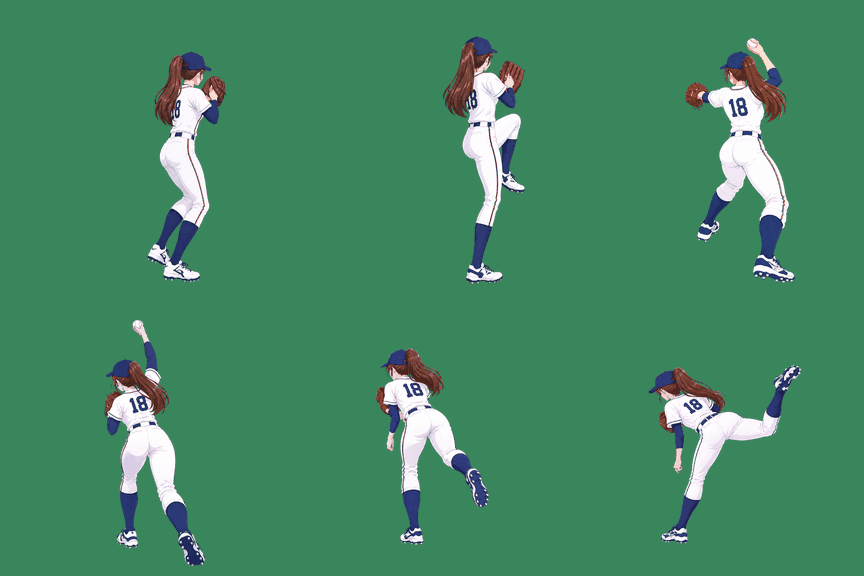
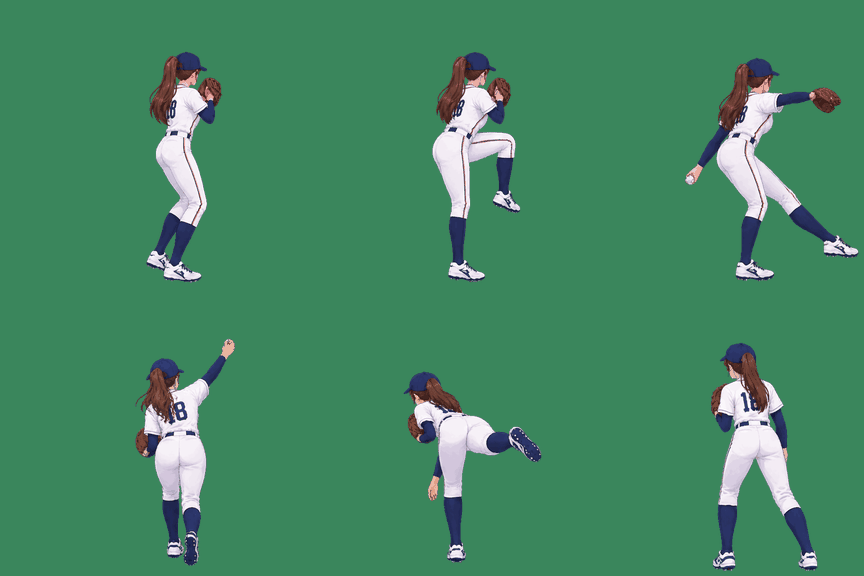
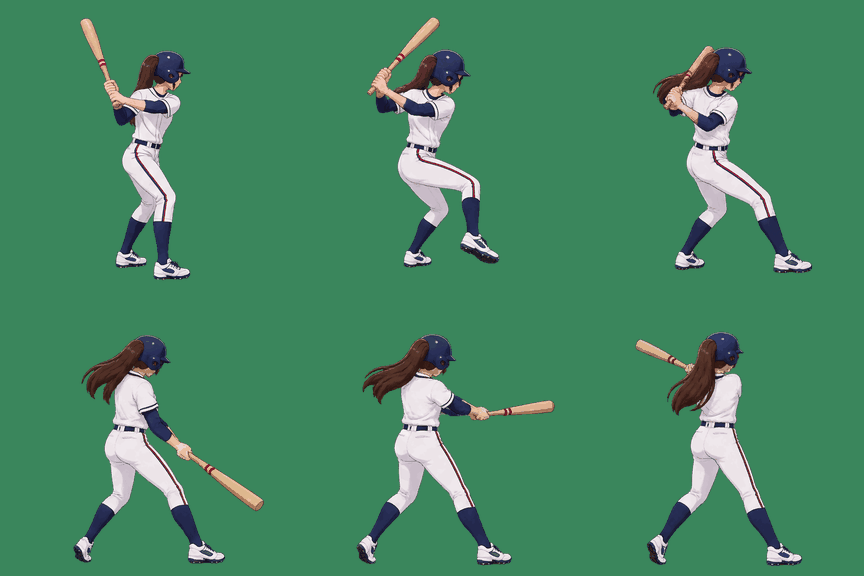
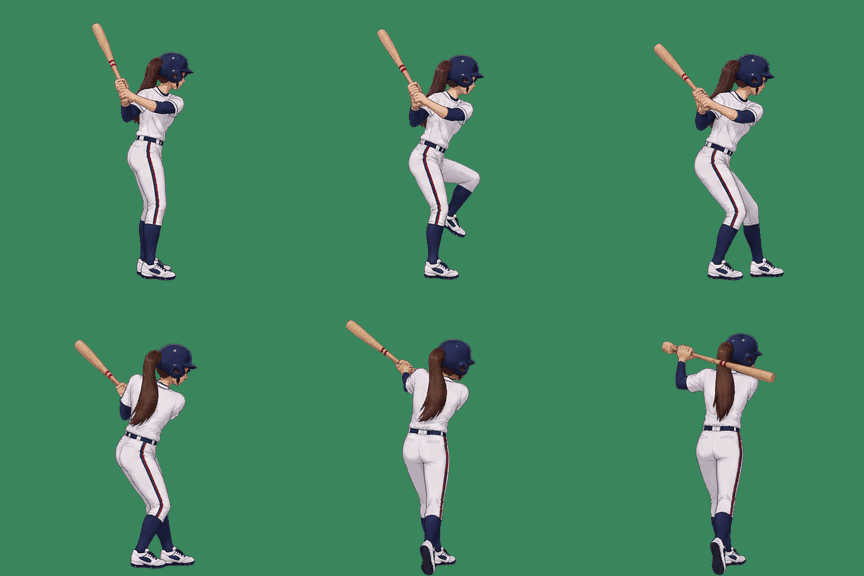
The game has two screens. The batting screen sees the batter from behind and the pitcher from the front. The mound screen is the reverse: the pitcher from behind, the batter from the front. So every player needs four views.
Words alone
The generator was GPT Image 2.6 on Higgsfield. It draws one motion as one transparent GIF (16 frames, 576×576) for 1 credit. As a reference it got two drawings from the old art side by side, her stance and her contact, and the prompt said what to draw in each frame.
Frames 1-2 her stance; 3-4 the load, weight back, front foot lifting;
5-6 the stride, front foot planted, hands still back; 7 the launch, hips open,
knob leading; 8 CONTACT; 9-11 extension and follow-through to the bat wrapped
behind her front shoulder; 12-16 she holds the finish.
Each character and her number held, and the frame script was followed closely. The four pitches seen from the batter’s side are still the drawings from that day.
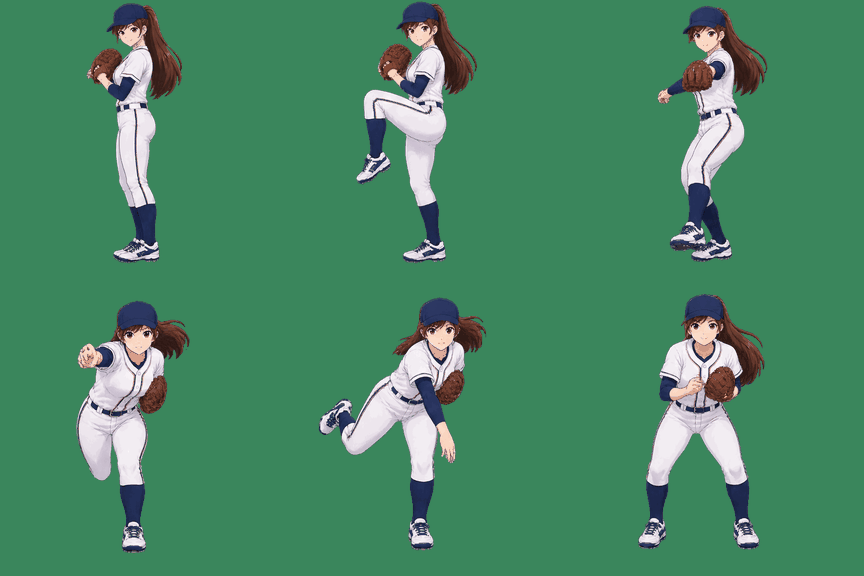
Two things were wrong.
The first was the height of contact. Left alone, she meets the ball at chest height, above the game’s strike zone. Asking for “a belt-high pitch” brought it down.
The second was the legs of the pitch seen from behind the mound, and that is where it stuck.
- At first she stepped with the foot on her throwing-arm side. Mira, a left-hander, threw right-handed.
- Drawn again, the stride foot was right, but in the kick she lifted the leg nearer the camera: the leg on her throwing side.
- With the prompt rewritten, the third round lifted the far leg. Even so, I did not use these drawings and kept the old art.
That was 13 GIFs thrown away. What worked in the third round was a sentence that describes the picture, not one that names the leg.
the near leg does not move, straight, drawn whole from hip to shoe IN FRONT of
the other leg, its side stripe visible all the way down; the far leg's thigh
comes out from BEHIND her hip ... we see the INNER side of the lifted leg,
plain white, no side stripe
For a figure seen from the side, “her left leg” or “her glove-side leg” did nothing. What the generator follows is the picture: which leg is drawn in front, which is hidden behind it, where the stripe down her pants shows.
Finding footage from the same camera
Instead of explaining in words, I decided to show it the real motion. There was one condition: the same camera as the game.
The mound screen is the centre-field camera of a baseball broadcast: over the pitcher’s back, the batter face on. The batting screen is the umpire’s eye behind the catcher, an angle broadcasts hardly use. Compilations of umpire-camera footage were wide-angle with the batter cut off, and mostly showed other moments. In the end the swing came from slow-motion batting practice filmed straight behind home plate at waist height.
Three videos were watched.
- MLB | Top 10 Longest Lefty Home Runs (On Deck): the right-handed pitcher and left-handed batter of its first clip. Used for the swing seen from the mound, and for the first try at the pitch.
- Top 10 Longest Home Runs | Left On Left Crime (On Deck): a left-handed pitcher. This camera sees a left-hander from his glove side, which is the side the game sees Rio, a right-hander, from. So it was used mirrored.
- Mike Trout Slow Motion Hitting Mechanics Baseball Swing Rare View (PastimeAthletics): used for the swing seen from behind.
The videos were only watched in the browser, paused and stepped a frame at a time. Nothing was downloaded, and no still of them is in the repository or in this post. Only the positions of the joints were taken.
Taking only the pose
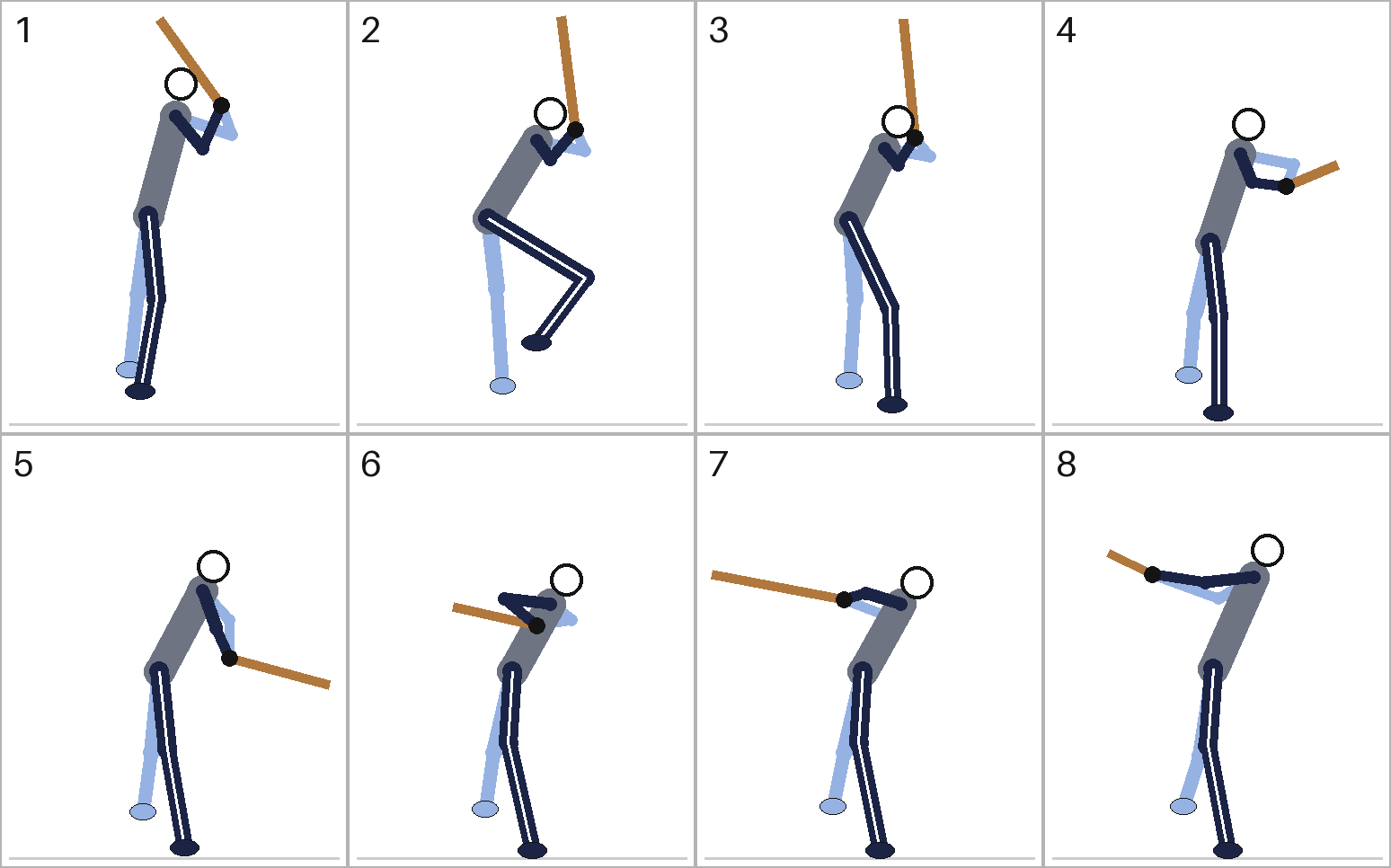
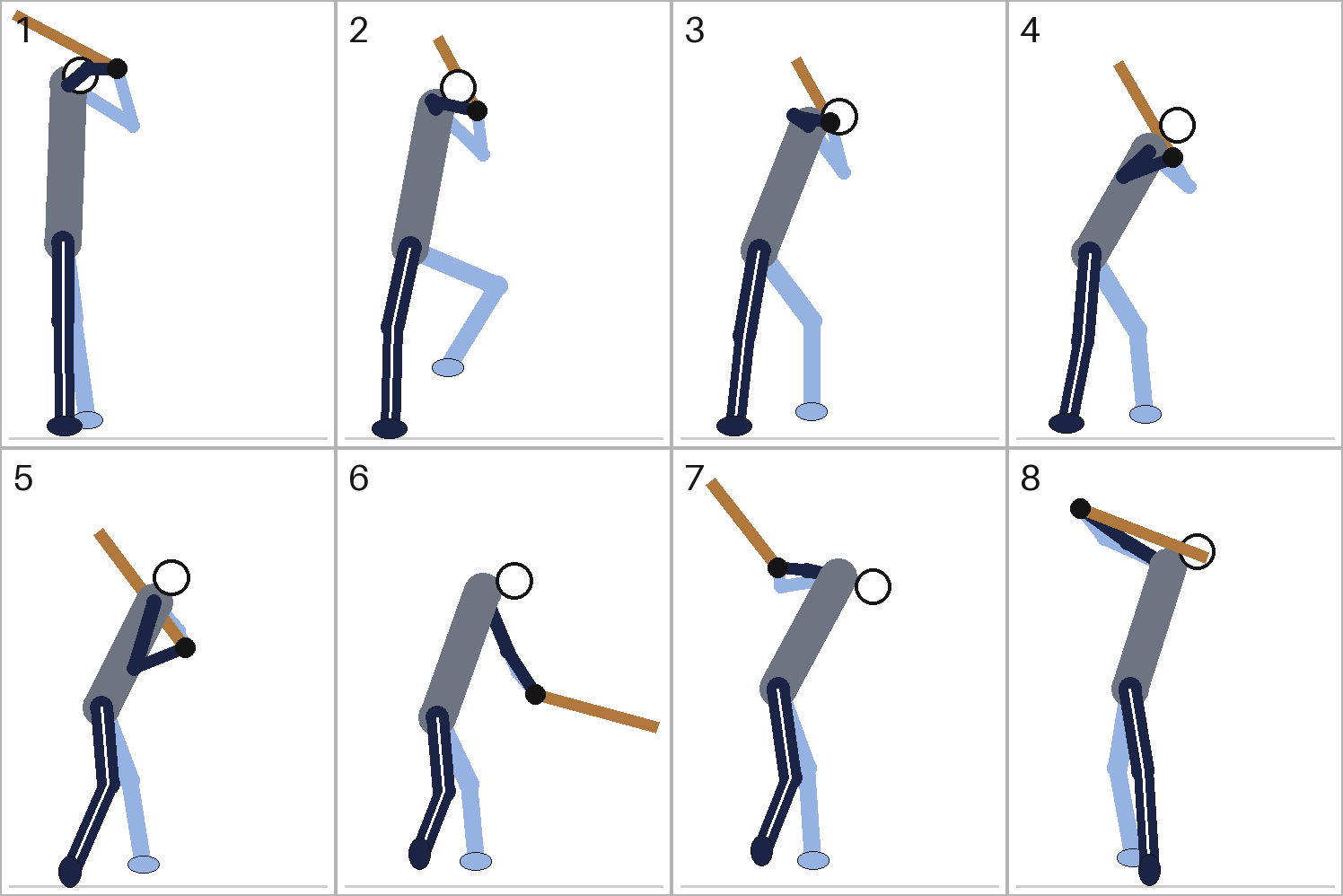
Eight moments were picked for each motion. For a swing: the stance, the knee lift, the foot coming down, the launch, the bat coming down, contact, the follow-through, the finish. On each, the head, shoulders, elbows, hands, hips, knees and feet were marked. Apple’s Vision framework found the bodies, but the marks actually used were placed one by one over a pixel grid. Joined up, they became a numbered sheet of eight panels.
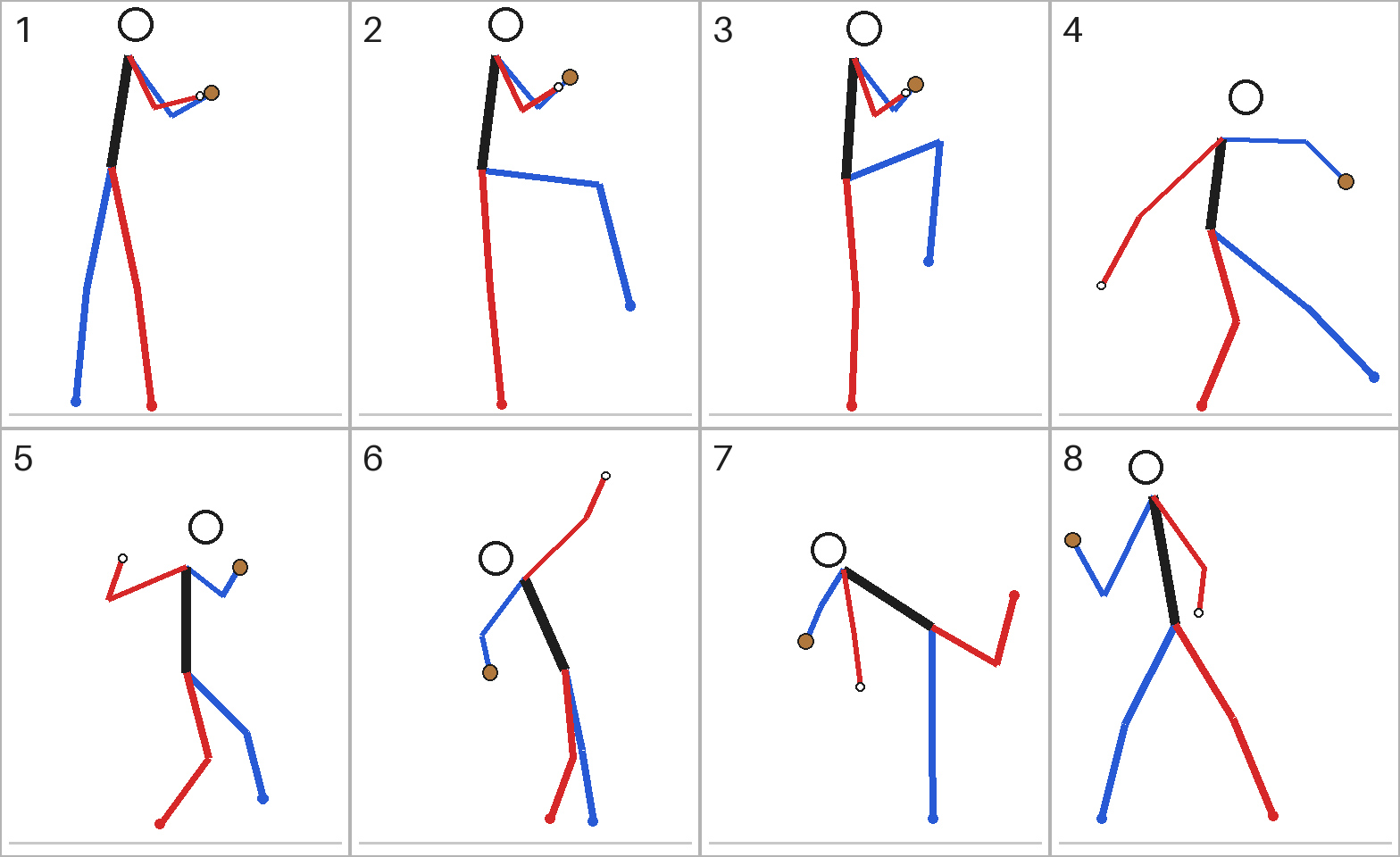
The generator got two references: the character, and this sheet. The prompt said which of the eight poses each of the 16 frames is.
A stick figure does not say what is in front
The first result followed the sheet’s outline and timing. And it lifted the leg nearer the camera again. Colour can tell left from right on a stick figure, but not which one is in front.
So the sheet was drawn again. The limbs nearer the camera are dark and thick, drawn on top. The far ones are pale blue, behind them. The standing leg has a white line down it: the side stripe of her uniform pants.
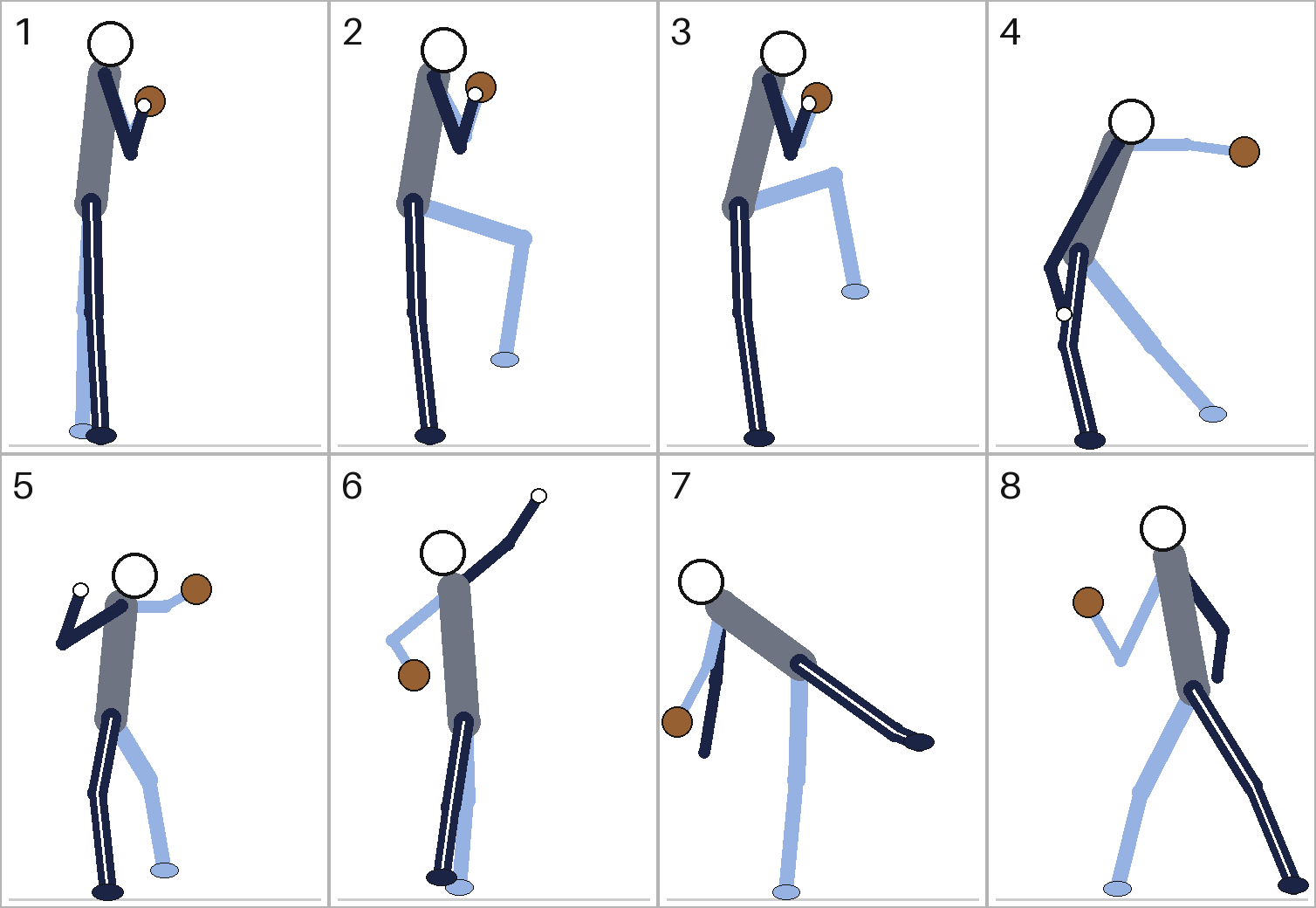
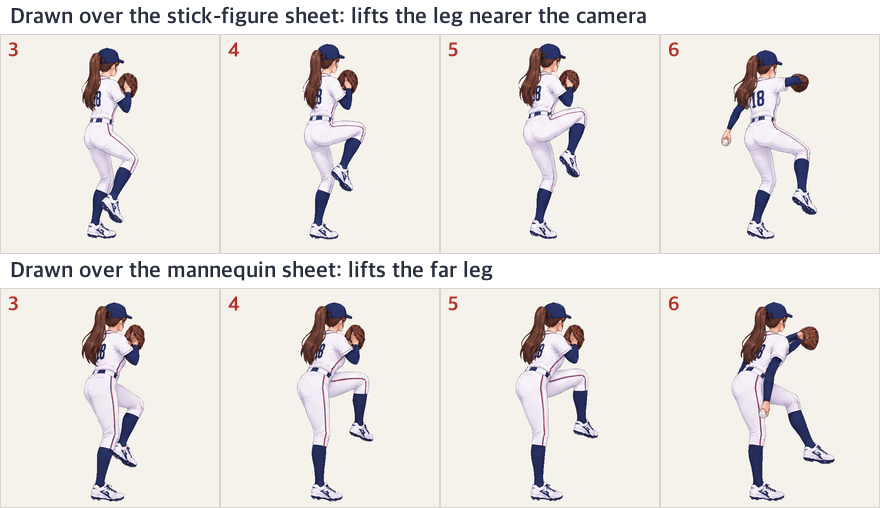
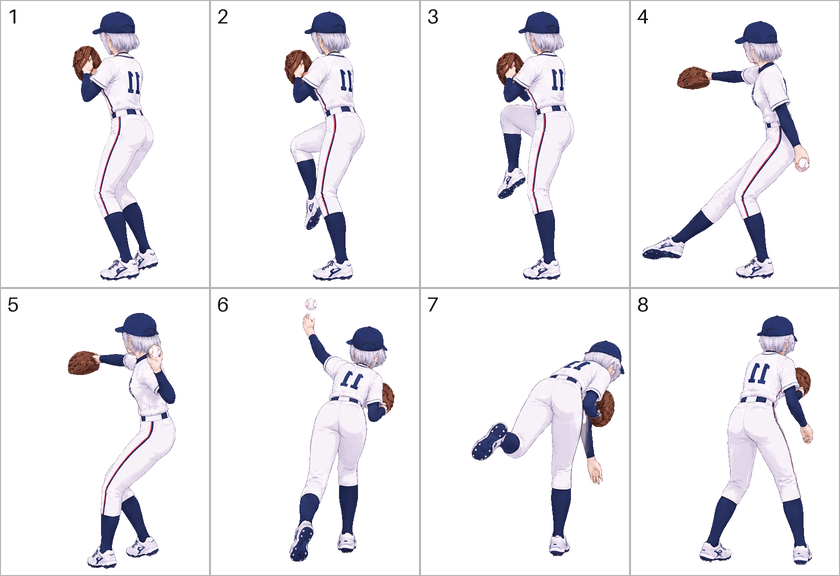
This time it was right in one go. She stands on the leg with the stripe, the far leg comes up from behind her hip, and at release her number faces the camera. Seen from behind, a pitcher strides away from the camera, so in the picture the foot swings out and comes back in to land near the standing foot. The old art, and the drawings made from words, stepped far out to the side.
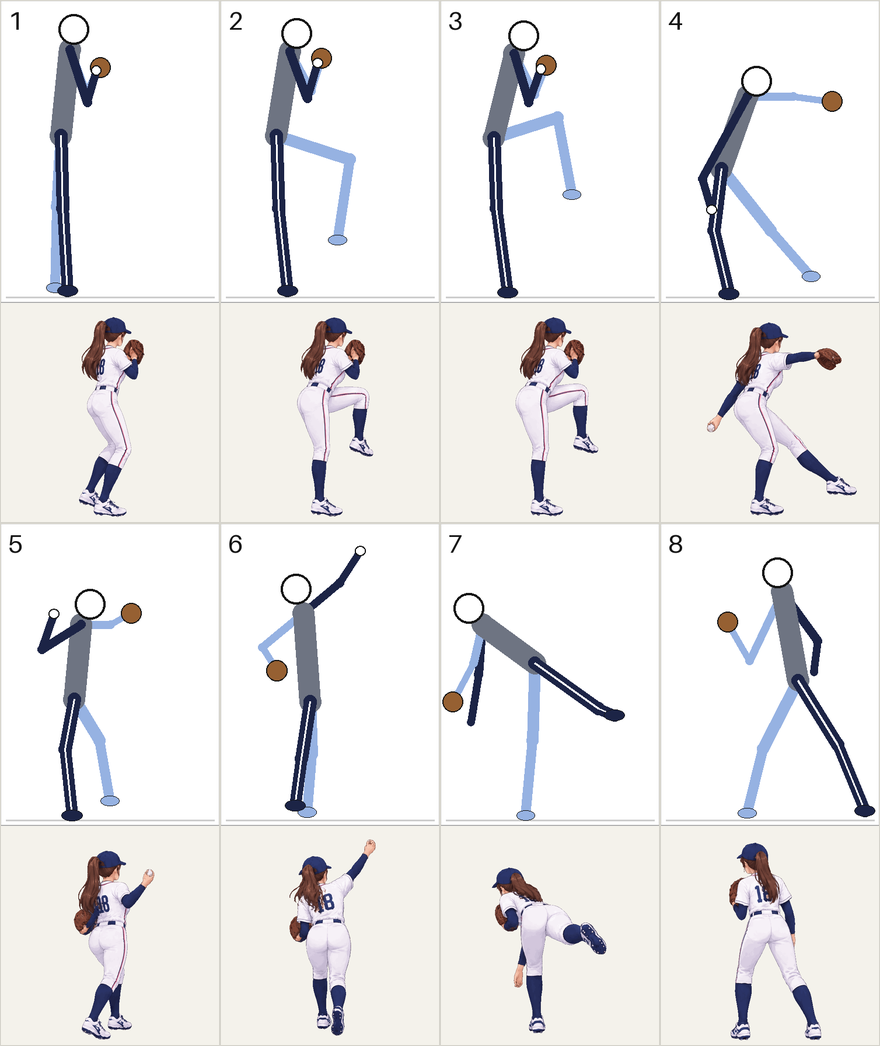
There was one flaw. In frame 8 an extra hand holding the ball was drawn in front of her face. That frame was left out, and 15 went into the game.
It copies the pose of the reference, too
The swing seen from the mound took four tries.
In the first, once her foot came down she stood with her legs spread left and right and her chest square to the camera, although the sheet has her feet on one line toward the camera. The cause was the character reference. The old contact drawing I had given it stood that way, and the generator took the pose from a picture that was only meant to show who she is.
For the second I gave it her stance alone and wrote that the picture shows who she is, not how she stands. The stance closed. But now her feet were side by side. It had obeyed “never wider apart than one shoe” to the letter. A batter strides toward the camera, so the stride should look short in the picture, but here it did not show at all.
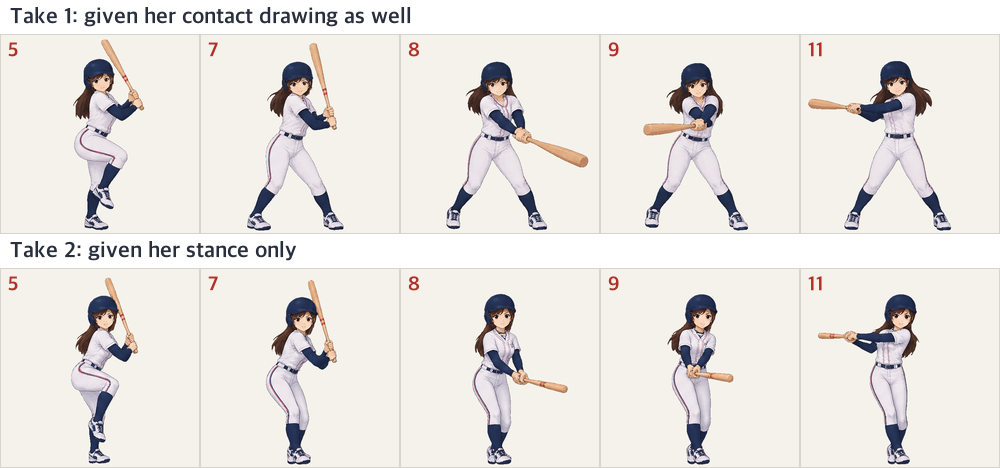
For the third the sheet was changed. The front foot now lands one shoe-length lower in the picture, so the stride shows, and the bat is drawn at its full length at contact. The limit in the prompt was rewritten as what it should look like in the picture.
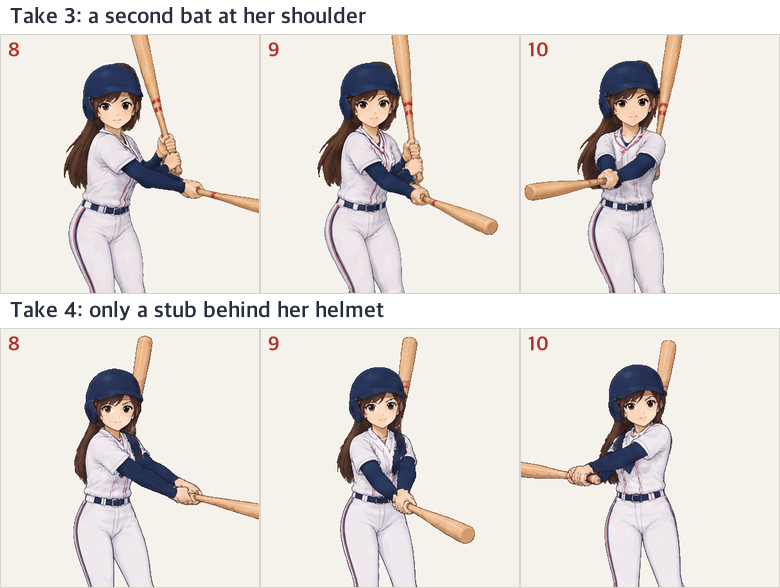
The legs were right. Now a second bat stayed up at her shoulder while she swung. “One bat, never a second bat” was already in the prompt. The fourth prompt said what her hands do instead: her two hands never part, and both go out with the one bat. The second bat was gone, and only a stub was left behind her helmet. The stub was erased from the drawings.
The skeleton of the prompt
Abridged, the fourth prompt looks like this.
Reference image 1 shows WHO she is and how she is drawn: her face, hair, helmet,
uniform, shoes, bat, drawing style and size. Do not copy its pose ...

Reference image 2 is a POSE GUIDE, not a character: eight numbered mannequin
poses of this swing ... How to read the guide: the DARK limbs are her FRONT side
..., the side NEARER the camera, and are drawn IN FRONT; the PALE BLUE limbs are
her BACK side ..., FARTHER from the camera, and pass BEHIND her body and behind
the dark limbs. The white line down the dark leg is her pants' side stripe. ...
Draw only her, never the mannequin, its colours, the panel borders or the numbers.

Her hands and her bat: there is ONE bat. ... Her two hands never part: when the
bat swings out over the plate BOTH hands go with it, no hand stays up at her
shoulder ...

Timing: frames 1-3 pose 1, held ...; frame 4 between poses 1 and 2; frame 5
pose 2 ...; frame 6 pose 3 ...; frame 7 pose 4 (the launch ...); frame 8 pose 5,
CONTACT ...; frame 9 pose 6 ...; frame 10 pose 7 ...; frame 11 between poses 7
and 8; frames 12-16 pose 8, held ...- Pin down that the first reference only says who she is.
- Say that the second reference is a pose, not a character, and how to read it. “Never draw the mannequin” was needed as well.
- Where it keeps going wrong (the hands and the bat), say what they do.
- Say which pose each of the 16 frames is.
The swing from behind: a sheet can be edited
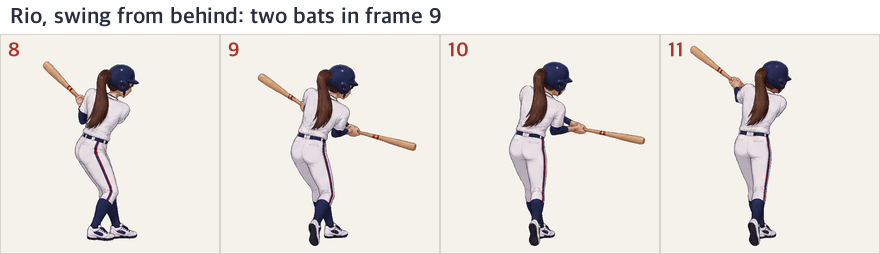
The swing on the batting screen was redrawn the same way. From behind, a batter strides away from the camera. Her legs overlap, one behind the other, and as she swings her back comes round to the camera. In the old art her feet ended up 0.7 of her height apart across the picture.
The batter in the footage was reaching for a low pitch, his bat 50 degrees below level. The game’s zone is belt-high. So on the sheet the hands stayed where they were and the bat was laid at 15 degrees. The footage was never something to copy as it is. Once it is reduced to joints, it is an intermediate drawing that can be changed as much as needed.
This one came out in a single generation. Its one flaw was two bats in frame 9, and the very next frame was a clean contact. That frame was left out and ten were picked.
Four players, and left-handers
The other players were drawn over the same sheets without going back to the footage. For a player of the other hand, the sheet was mirrored panel by panel. The swing from behind has to show her number and the back of her hair, so a crop of her back, helmet to belt, from the old art went in as one more reference. As long as the prompt said what that picture was for, it did not pull the pose toward it.
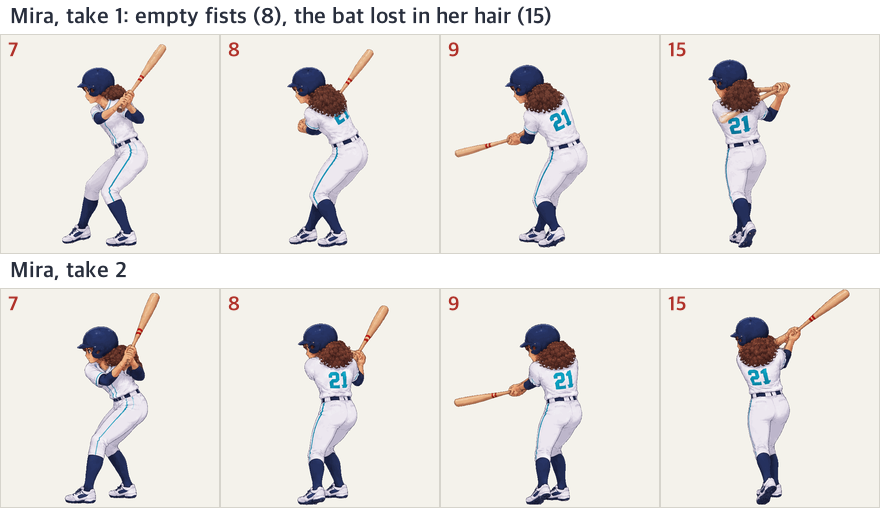
The swings mostly came out first time. Only Mira needed a second. In her first, one frame had two empty fists and no bat, and at the finish the bat faded into her curls.
It stuck again at the left-handed pitchers. Sena, a right-hander, was right first time with Rio’s sheet. Mira and Noel, left-handers, got the mirrored sheet, and both lifted the leg nearer the camera. For Mira I also tried mirroring her reference, having her drawn right-handed, and flipping the result. Same leg.
What worked was dropping the mannequin. Eight of Sena’s finished drawings, mirrored, became the pose reference.
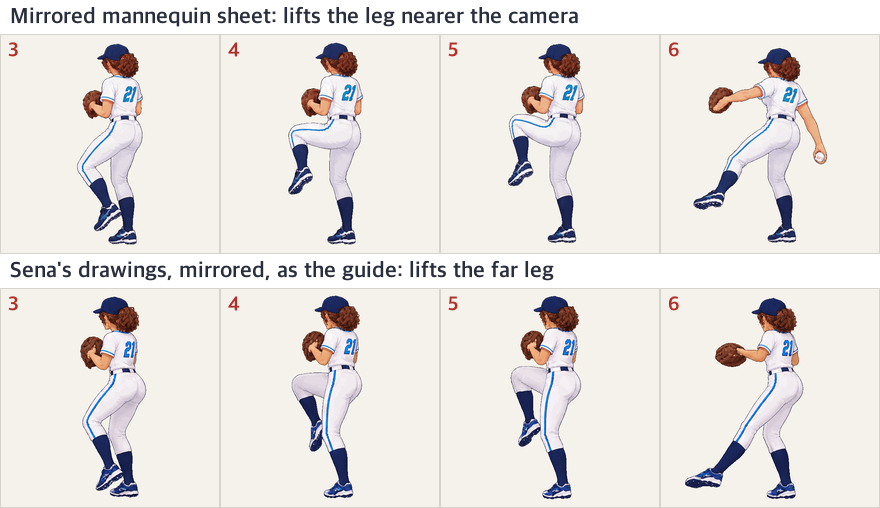
The legs were right. But Sena’s things came along. Mira’s arms are bare, and Sena’s long navy sleeve was drawn on them in six frames. Noel, drawn the same way, came out with Sena’s 11 on her back in eleven of sixteen frames, although the prompt said not to draw the number 11.
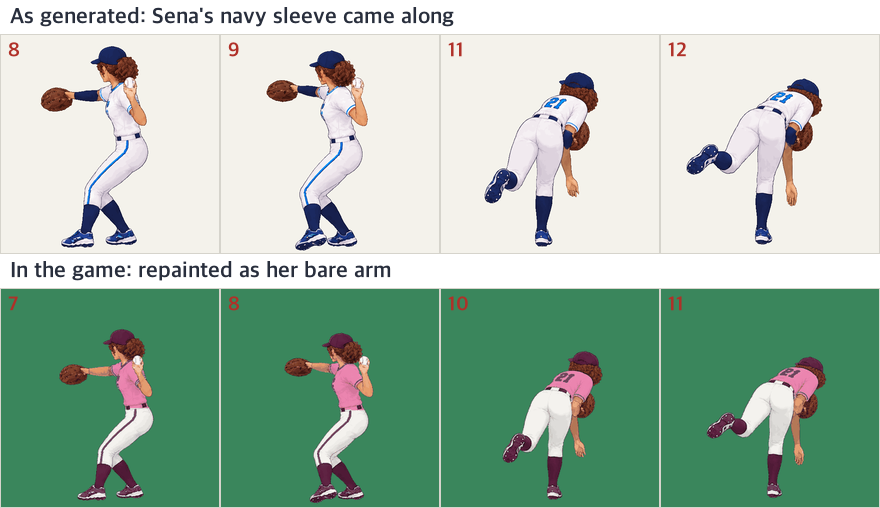
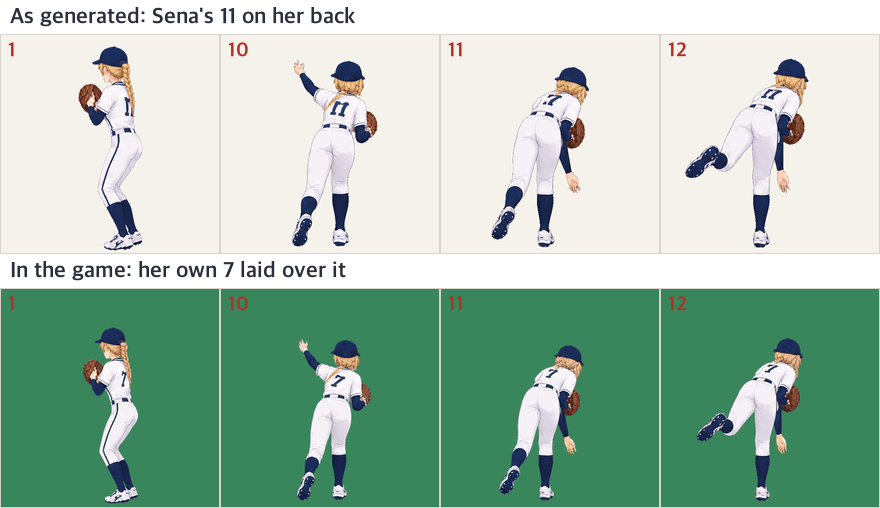
Neither was generated again. Both were fixed in the drawings.
From a GIF to game art
A generated GIF does not go straight into the game. Three Python tools sit in between.
make_motions.pypicks which of the 16 frames to use, places them in 512 px cells at the same height and on the same feet as the old art, and writes the contact and release coordinates and how long each frame lasts.make_layers.pymakes the masks for her jersey and pants so the team colours can change, and lifts the bat out as its own layer. The game turns the bat to where you touch, so it cannot be part of the drawing.trace_hem.pyfollows the top of her belt to find the line between jersey and pants.
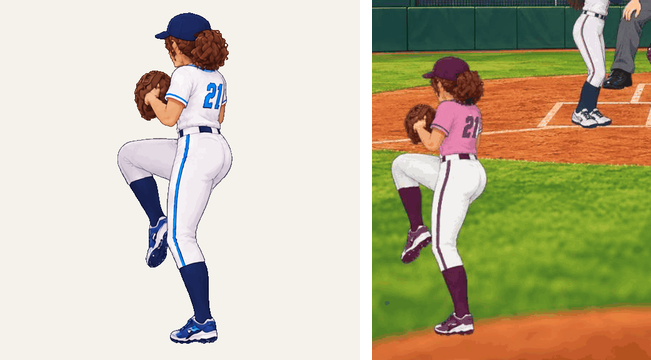
The waistline took the most hand work. Seen side-on, the belt read as one piece with the stripe down her pants. In one frame a ponytail hanging down her back was read as the belt, and in others a navy sleeve across her body was. Where the tool cannot find the belt, a few points marked on it tell the tool where it is.
Colours that match were the other problem. Mira’s skin is close to the wood of the bat, so in her contact frame the bat’s line ran on through her fists and up her arm. That frame has the middle of her fists marked by hand. For silver-haired Sena, the shading in folds of cloth was read as hair. In places like these it is the tools that go wrong, not the generator.
One thing that caught me in Godot: after replacing the image files, without godot --headless --import the game plays the old texture with the new frame count.
What the generator gets wrong is fixed in the drawing
| What was wrong | How it was fixed |
|---|---|
| Two bats or three hands in one frame | That frame is left out, and the frames around it share its time. |
| A stub of bat left behind the helmet (3 frames) | A point is marked on the stub, and the wood joined to it and its outline are erased. |
| Another player’s long sleeve (6 frames) | The navy joined to a point on the sleeve is repainted in the skin colour of the arm beside it. |
| Another player’s number (10 frames) | Her own 7 is cut from a frame that has it and laid over, tilted to match her back. |
| After the throw, her arm hangs from the wrong side | The last frame is left out, or the misplaced arm is erased. |
| The ball in her hand touches her shoulder and takes the uniform’s colour | Where the ball is, and its radius, are marked. |
The repaint needed a radius. Without one, the belt that the sleeve lay against turned skin-coloured as well.
Each fix was kept as a test. Once what you saw is a number, you do not have to look for the same thing in the next drawing.
- In the kick, does the stripe show on the leg she stands on? This test caught the drawings made over the mirrored sheet: the share of the standing thigh showing the stripe was 1.0 for Rio and Sena, 0.04 for Mira and 0.0 for Noel.
- Is there one bat in every frame?
- Seen from behind, are the batter’s feet never more than 0.45 of her height apart?
- Is no ball drawn after the release?
What it cost
| How | Generations | Motions in the game now |
|---|---|---|
| Words alone | 30 | 4 |
| Over a pose sheet | 20 | 12 |
| Total | 50 | 16 |
One generation is 1 credit, so 50 credits. I have left out the money, since it depends on the plan.
Of the 30 generations asked for in words, the four pitches seen from the batter’s side are what is left. The 13 pitches from behind the mound were all thrown away, and the eight swings were drawn again over pose sheets. With pose sheets, 20 generations replaced twelve motions. Eight of those could not be used.
What I learned
- Draw the depth. Until the sheet showed, by colour and overlap, which limbs are on the camera side, the legs were wrong.
- A reference is copied pose and all. Give the character’s stance alone, and say what the picture is for.
- Describe the picture, not the name. Not “her glove-side leg” but “the leg drawn in front, with the stripe showing”.
- A number is obeyed to the letter. “Never wider than one shoe” put her feet together.
- “Don’t” is weak. Saying what her two hands do worked where “no second bat” had not.
- Another character’s finished drawings are the strongest pose reference. Her sleeves and her number come with them. Painting the number out of the reference first is something I have not tried yet.
- One wrong frame is cheaper to fix than to redraw. Leave it out, erase it, or repaint it.
What is left
- None of this has been checked on a phone yet. So far it has been recordings of the game on a computer, looked at frame by frame.
- In a few frames the bat’s line is not found and the painted bat shows as it is. These are mostly finishes with the bat wrapped behind her.
- The poses came from footage of real players. The footage and its frames were not taken: only joint positions, and on the sheets the bat’s angle and the handedness were changed. The sources are linked above.